
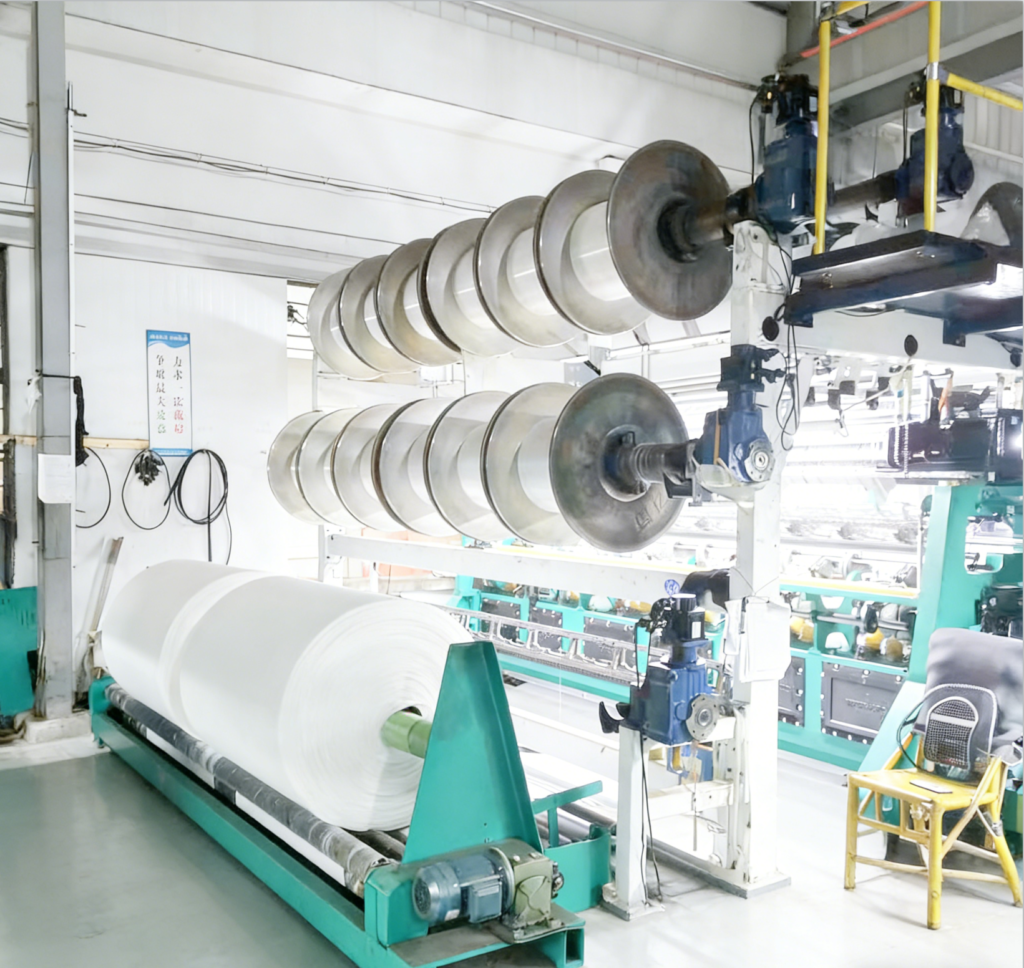
I still remember the first time I walked through our production floor. The hum of machines, the careful handling of materials, and the precision of every step amazed me. But I also learned something important that day: making quality mesh fabric is not just about having good machines. It is about controlling every single step.
The mesh fabric production process involves five main stages: raw material preparation, warping, knitting, dyeing and finishing, and quality inspection. Each stage requires strict control to prevent defects. Temperature management, material storage, and tension control are critical factors that directly affect the final product quality.
Many people think that mesh fabric production is simple. They think you just need to put yarn into a machine and fabric comes out. But the truth is different. Every stage has its challenges. If you ignore even one small detail, the entire batch can have problems. Let me walk you through this process and show you where things can go wrong.
What Are the Key Stages in Mesh Fabric Production?
Making mesh fabric is like cooking a complex dish. You need the right ingredients, the right tools, and the right timing. Miss one step and everything falls apart.
Mesh fabric production consists of five essential stages: raw material preparation and storage, warping (yarn arrangement), knitting or weaving, dyeing and finishing, and final quality inspection. Each stage must maintain specific environmental conditions and follow precise protocols to ensure consistent quality.
Stage 1: Raw Material Preparation and Storage
This is where most problems start. I learned this the hard way. We once received a batch of complaints about uneven tension in our fabric. After investigating, we found that the raw materials were stored in a warehouse with no temperature control. The yarn expanded and contracted with temperature changes. This changed its properties before we even started production.
Good material preparation needs proper equipment. We use specialized winding machines to organize our polyester and nylon yarns. These machines do more than just wind yarn onto spools. They measure tension, remove weak spots, and ensure uniform diameter. Poor winding equipment creates uneven tension. This causes visible defects in the final fabric.
Storage conditions matter just as much. We keep all raw materials in climate-controlled rooms. The temperature stays between 20-25°C. Humidity is kept at 60-65%. When yarn is exposed to moisture or extreme temperatures, it changes. Some fibers absorb water and swell. Others become brittle in dry conditions. These changes are invisible to the eye but show up clearly in the fabric.
| Material Issue | Cause | Effect on Final Product |
|---|---|---|
| Uneven tension | Poor winding equipment | Visible lines and texture inconsistency |
| Moisture absorption | Improper storage | Dimensional instability after washing |
| Yarn contamination | Outdoor storage | Dark spots and color defects |
| Temperature damage | No climate control | Brittleness and breaking during production |
Stage 2: Warping Process
Warping is the step where we arrange hundreds or thousands of yarn threads in parallel. These threads must have exactly the same tension. If one thread is tighter than the others, it will create a line in the fabric. We call this a "tension mark."
Our warping machines have sensors that monitor each thread. If tension goes outside the acceptable range, the machine stops automatically. We also keep the warping room temperature stable. A 5°C temperature difference can change yarn tension by 2-3%. This sounds small, but it creates visible defects.
Stage 3: Knitting or Weaving
This is where the actual fabric is formed. For sandwich mesh fabric, we use specialized knitting machines. These machines have hundreds of needles working together. Each needle must move at exactly the right time. The spacing between yarns must be uniform.
Temperature control is critical here too. When the room temperature changes, metal parts in the machine expand or contract. This changes the spacing between needles by tiny amounts. Over thousands of stitches, these tiny changes become visible patterns in the fabric.
We maintain the knitting room at 22°C with minimal variation. We also check machine alignment every day. Small adjustments prevent big problems.
Stage 4: Dyeing and Finishing
Many defects appear during dyeing. If the fabric had uneven tension during knitting, it will show up as color variation. Tighter areas absorb more dye. Looser areas absorb less. The result is a fabric with light and dark patches.
Our dyeing process uses computer-controlled systems. Temperature, pressure, and dye concentration are monitored constantly. We also pre-treat fabrics to relax any residual tension before dyeing. This makes color application more uniform.
Stage 5: Quality Inspection
This is our last chance to catch problems. We inspect every meter of fabric under strong lights. We check for holes, tension marks, color variations, and any other defects. Fabrics that fail inspection go back for analysis. We need to know if the problem came from materials, machine settings, or environmental conditions.
How Do Environmental Conditions Affect Mesh Fabric Production?
I once toured a competitor's factory. They had excellent machines, but their production floor was hot in summer and cold in winter. Their defect rate was three times higher than ours. This taught me that environment is just as important as equipment.
Environmental conditions, especially temperature stability and humidity control, directly impact mesh fabric quality. Temperature variations cause material expansion and contraction, leading to tension inconsistencies. Proper climate control reduces defect rates by up to 70% compared to uncontrolled environments.
Temperature Control Throughout Production
Different stages need different temperatures, but they all need stability. In material storage, we keep temperatures between 20-25°C. In the knitting area, we aim for 22°C with no more than 2°C variation throughout the day. In dyeing, we use precise temperature control for each dye bath.
Why does this matter so much? Synthetic fibers like polyester and nylon are plastic materials. They expand when warm and contract when cold. Even a small temperature change affects their dimensions. When you are working with thousands of threads, small individual changes add up to big visible defects.
We invested in climate control systems five years ago. Our defect rate dropped from 8% to 2%. The investment paid for itself in less than two years through reduced waste and fewer customer complaints.
Humidity Management
Humidity affects different fibers differently. Nylon absorbs moisture and swells. Polyester is more stable but still responds to extreme humidity. When humidity changes during production, different yarns in the same fabric respond differently. This creates uneven texture.
We maintain humidity at 60-65% in most production areas. This level keeps nylon stable without promoting mold growth or static electricity. In winter, we add moisture to the air. In summer, we remove it. The cost is worth it because consistent humidity means consistent quality.
| Environmental Factor | Optimal Range | Effect If Not Controlled |
|---|---|---|
| Temperature | 20-25°C | Tension variations, visible lines |
| Humidity | 60-65% | Dimensional changes, texture problems |
| Air flow | Gentle, filtered | Dust contamination, temperature spots |
| Light exposure | Minimal UV | Color fading in stored materials |
What Quality Control Measures Ensure Consistent Production?
Quality control is not just about final inspection. It happens at every stage. We learned this after years of trying to catch problems at the end. By then, it was too late. Now, we prevent problems before they happen.
Effective quality control in mesh fabric production requires multiple checkpoints throughout the process. Material testing before production, continuous monitoring during manufacturing, and comprehensive final inspection work together to maintain standards. Companies with staged quality control report 60-80% fewer customer returns than those relying only on final inspection.
Pre-Production Material Testing
Before we accept any raw material shipment, we test samples. We check yarn strength, elasticity, diameter consistency, and moisture content. Materials that fail any test are rejected. This seems strict, but it prevents much bigger problems later.
We also test how materials respond to our production environment. We expose samples to our typical temperature and humidity for 24 hours. Then we test them again. If properties change significantly, we know these materials will cause problems during production.
In-Process Monitoring
During production, we check fabric at regular intervals. Every 100 meters, we measure thickness, weight per square meter, mesh opening size, and appearance. If any measurement drifts outside our specification range, we stop and adjust the machine.
We also use automated systems that detect some defects in real-time. Cameras scan the fabric as it comes off the knitting machine. They can spot holes, thick places, and tension marks. When they detect a problem, they mark the location so we can inspect it more carefully.
Machine Maintenance and Calibration
Good quality requires good machines. We maintain our equipment on a strict schedule. Knitting machines are cleaned and calibrated weekly. Dyeing equipment is checked daily. Winding machines are inspected before each shift.
We keep detailed maintenance records. This helps us spot patterns. If one machine produces more defects than others, we know it needs attention even if it has not broken down yet.
Final Inspection Protocol
Our final inspection is thorough. We inspect every meter under bright lights on a large inspection table. Two people check each roll independently. If they find defects, they mark the location and classify the severity.
Minor defects might be acceptable for some applications. Major defects mean the fabric is rejected. We track defect types and rates. This data helps us identify which production stage needs improvement.
| Quality Control Stage | What We Check | Frequency |
|---|---|---|
| Material receiving | Strength, diameter, moisture | Every shipment |
| Warping | Tension uniformity, thread breaks | Continuous monitoring |
| Knitting | Stitch quality, mesh spacing | Every 100 meters |
| Dyeing | Color consistency, pH levels | Every batch |
| Final inspection | All visual defects | 100% of production |
How Does Equipment Quality Impact the Final Product?
I visited a factory in Southeast Asia last year. They bought the cheapest winding machines they could find. Their production cost was lower than ours, but their defect rate was four times higher. They lost more money on wasted material than they saved on equipment. This is a common mistake.
Equipment quality directly determines product consistency and defect rates. High-quality winding equipment reduces tension variations by up to 90% compared to basic machines. Precision knitting machines can maintain mesh opening tolerances within ±0.1mm, while lower-quality machines vary by ±0.5mm or more.
Winding Equipment Impact
Winding machines do more than wind yarn. Good machines have tension sensors, speed controls, and defect detection. They can remove weak spots in yarn automatically. They wind with uniform tension from start to finish.
Poor winding equipment creates uneven tension. When this yarn goes through the knitting process, areas with different tension create visible lines in the fabric. We call these "barre marks." They are one of the most common quality complaints in the textile industry.
We use electronic winding machines with servo motors. These machines can adjust tension in milliseconds as the yarn diameter varies slightly. This level of control is impossible with simple mechanical winders. The investment is significant, but the quality improvement is worth it.
Knitting Machine Precision
Modern knitting machines are incredibly precise. They can position needles within micrometers. They can adjust stitch timing based on yarn thickness. They can detect broken threads and stop automatically.
Older or cheaper machines lack these features. They produce fabric, but the quality varies. Mesh openings might be different sizes. Stitches might be looser in some areas. The fabric might have thin and thick spots.
We recently upgraded our knitting machines. The new machines cost 40% more than the old ones, but they produce 30% more usable fabric per shift because defect rates dropped so much.
Dyeing Equipment Technology
Dyeing equipment affects color consistency. Computer-controlled dyeing machines can maintain temperature within ±0.5°C and pressure within ±0.1 bar. This precision produces uniform color. Manual or semi-automatic equipment cannot match this consistency.
We use high-temperature jet dyeing machines. These machines circulate fabric through dye solution at controlled speeds. The circulation pattern is designed to prevent creasing and ensure even dye penetration. Simpler equipment like package dyeing machines are cheaper but less consistent for mesh fabrics.
Why Does Material Storage Deserve Special Attention?
Early in my career, I worked for a company that stored yarn in a simple warehouse. The building was not insulated. Summer temperatures reached 35°C. Winter temperatures dropped to 5°C. They could not understand why their quality was inconsistent. The problem was obvious once we measured the conditions.
Proper material storage can reduce production defects by 40-50%. Indoor climate-controlled storage prevents moisture absorption, temperature-related property changes, and contamination. Materials stored outdoors or in uncontrolled warehouses show 3-5 times higher defect rates during processing.
The Cost of Poor Storage
Outdoor storage exposes materials to rain, humidity, dust, and extreme temperatures. Even if materials are covered, they are affected. Humidity penetrates most coverings. Temperature cycles stress the material. Dust settles on spools and contaminates the yarn.
I have seen yarn stored outdoors develop mold spots. The mold creates dark marks in the final fabric. These marks cannot be removed by dyeing. The fabric is ruined before production even starts.
Some companies store materials in simple warehouses with no climate control. This is better than outdoor storage but still problematic. Temperature swings affect yarn properties. In hot weather, spools can deform under the weight of yarn. In cold weather, yarn becomes brittle and breaks more easily during processing.
Our Storage Standards
We store all raw materials indoors with climate control. The storage area maintains 20-25°C temperature and 60-65% humidity year-round. We use first-in-first-out inventory management to ensure materials do not sit too long.
We also protect materials from light. UV exposure can degrade yarn strength over time. Our storage area has minimal windows and UV-filtering lights. Materials are covered when not in use.
We track storage conditions with data loggers. If temperature or humidity goes outside the acceptable range, we receive an alert. We can correct the problem before it affects materials.
Return on Investment
Climate-controlled storage costs money. We spend on insulation, HVAC equipment, monitoring systems, and energy. But this investment saves us much more. Our raw material waste dropped from 5% to less than 1% after we improved storage. Our production defects from material problems dropped by 60%.
When we calculate the total cost, proper storage actually reduces our expenses. We waste less material. We have fewer production interruptions. We get fewer customer complaints. The quality improvement also allows us to charge premium prices for our products.
Conclusion
Quality mesh fabric production requires controlling every step, from climate-controlled material storage and precise winding equipment to stable production environments and comprehensive quality inspection. These measures reduce defects by 60-80% and ensure consistent, premium products that meet international standards.