
The textile industry faces huge pressure to reduce its environmental impact. Many manufacturers claim to be "green," but few can show real results. At Kaishitu, we work with recycled mesh fabrics every day, and we know both the promise and the challenges of sustainable textile production.
Mesh fabric supports sustainable development through recycled materials and eco-friendly production methods. Recycled polyester mesh fabrics reduce plastic waste, lower energy consumption by up to 59%, and minimize carbon emissions while maintaining the same performance as virgin materials.
The shift to sustainable mesh fabrics is not just about marketing. It requires real changes in how we source materials, develop products, and manage production. Let me share what we have learned from years of working with recycled materials.
What Makes Mesh Fabric Sustainable?
Traditional mesh fabric production relies heavily on virgin petroleum-based materials. This process consumes significant energy and releases harmful emissions. We need better alternatives, and the textile industry is finally taking action.
Sustainable mesh fabric uses recycled materials like post-consumer plastic bottles and regenerated polyester. These materials undergo mechanical or chemical recycling to create new yarn. The result is mesh fabric that performs just as well as traditional options while reducing environmental harm.
The sustainability of mesh fabric depends on three main factors. First, the raw material source matters most. Recycled polyester from PET bottles diverts waste from landfills and oceans. Second, the production process must minimize water use, energy consumption, and chemical discharge. Third, the final product should be durable and recyclable at end of life.
We work with different types of recycled materials in our factory. Post-consumer recycled polyester comes from used plastic bottles. Post-industrial recycled polyester uses manufacturing waste. Both types reduce the need for virgin materials. The quality depends on the recycling process and yarn spinning technology.
| Material Type | Source | Energy Savings | Performance |
|---|---|---|---|
| Virgin Polyester | Petroleum | Baseline | Excellent |
| Post-Consumer Recycled | Plastic Bottles | 59% less | Equal to virgin |
| Post-Industrial Recycled | Manufacturing Waste | 45% less | Equal to virgin |
| Bio-based Polyester | Plant Materials | 25% less | Slightly lower |
The technical properties of recycled mesh fabric match virgin materials in most applications. Tensile strength, breathability, and durability remain consistent. We test every batch to ensure quality standards. The main difference is not in performance but in environmental impact.
How Do Recycled Materials Transform Into Mesh Fabric?
The journey from plastic bottle to mesh fabric involves several critical steps. Each step must meet strict quality standards. We have refined this process through years of trial and error.
Recycled materials transform into mesh fabric through collection, sorting, cleaning, shredding, melting, and spinning into yarn. The recycled yarn then goes through knitting or weaving processes to create 3D spacer fabric. Quality control at each stage ensures the final mesh fabric meets performance requirements.
The transformation starts with material collection. PET bottles go through sorting by color and type. Contaminated materials get rejected. Clean bottles move to the shredding stage. The shredder breaks bottles into small flakes. These flakes get washed multiple times to remove labels, glue, and dirt.
After cleaning, the flakes go into an extruder. Heat melts the plastic at specific temperatures. The melted material passes through filters to remove any remaining impurities. Then it gets pushed through spinnerets to form continuous filaments. These filaments cool and solidify into yarn.
The yarn quality determines the final mesh fabric properties. We check several parameters:
| Parameter | Standard Range | Impact on Fabric |
|---|---|---|
| Yarn Strength | 3.5-4.5 g/d | Durability |
| Elongation | 25-35% | Flexibility |
| Uniformity | CV% < 3% | Consistent texture |
| Shrinkage | < 5% | Dimensional stability |
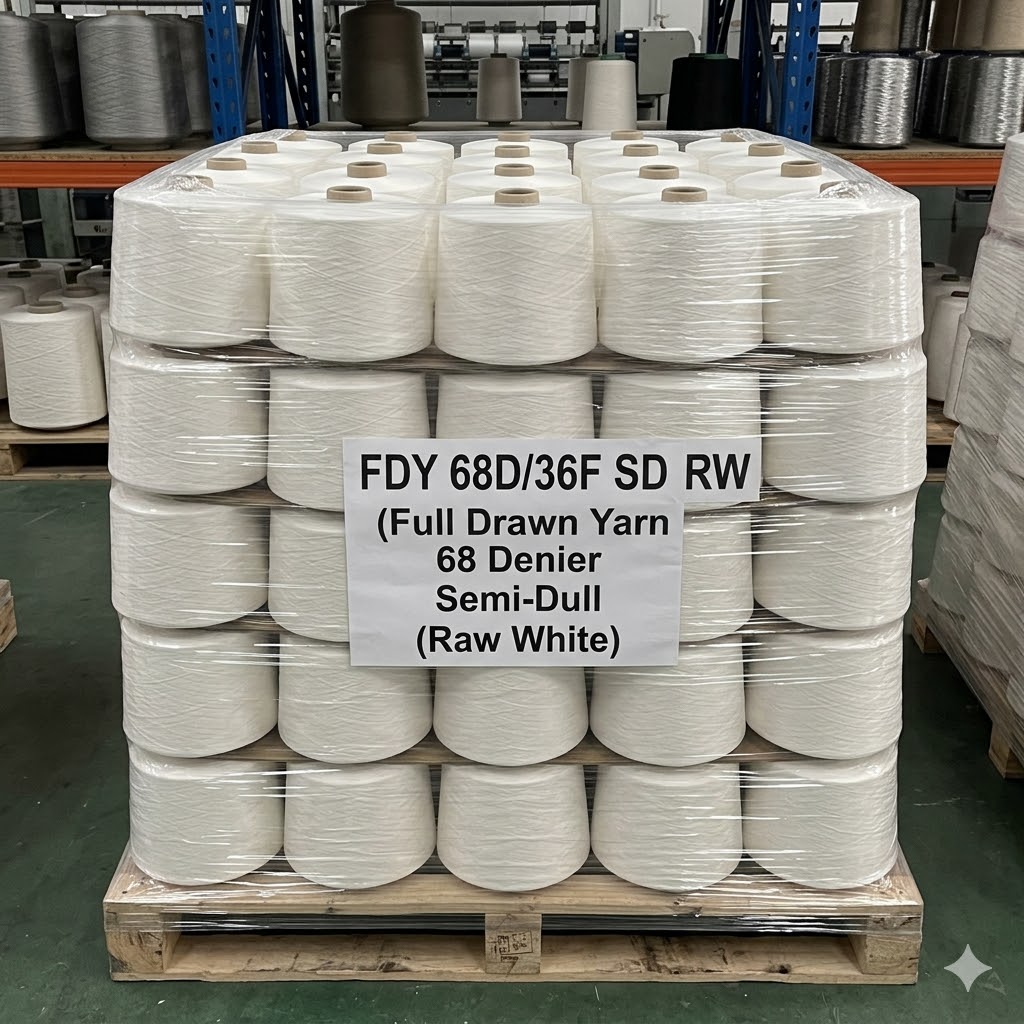
One challenge we face is yarn preparation for product development. Each raw material cone weighs about 7kg. Developing a new product requires 300-500 cones. This creates a major obstacle: the large quantity of raw materials needed drives up development costs significantly.
We solved this problem through a practical approach. We rewind yarn from large 7kg cones onto multiple smaller cones. This method reduces the total amount of raw materials needed for development. Instead of buying 300-500 full cones, we prepare just enough yarn for sampling. The rewinding process takes extra time but cuts development costs by more than 60%.
What Are The Environmental Benefits Of Sustainable Mesh Production?
The environmental benefits go beyond just using recycled materials. Every stage of production offers opportunities to reduce impact. We measure these benefits carefully.
Sustainable mesh production reduces carbon emissions by 32%, cuts water consumption by 94%, and decreases energy use by 59% compared to virgin polyester production. It also diverts millions of plastic bottles from landfills and oceans each year.
The carbon footprint reduction is significant. Virgin polyester production releases about 6.5 kg of CO2 per kg of fiber. Recycled polyester releases only 4.5 kg per kg. For a typical 10,000-meter production run of mesh fabric, this means saving about 400 kg of CO2 emissions.
Water consumption drops dramatically with recycled materials. Virgin polyester production uses about 70 liters of water per kg of fiber. Recycled polyester uses only 4 liters per kg. This matters especially in regions facing water scarcity. Our factory has reduced water use by 75% since switching to recycled materials.
Energy savings add up quickly across large production volumes. The table below shows our actual measurements:
| Production Stage | Virgin Material Energy | Recycled Material Energy | Savings |
|---|---|---|---|
| Raw Material Production | 108 MJ/kg | 45 MJ/kg | 58% |
| Yarn Spinning | 12 MJ/kg | 10 MJ/kg | 17% |
| Fabric Knitting | 8 MJ/kg | 8 MJ/kg | 0% |
| Finishing | 15 MJ/kg | 12 MJ/kg | 20% |
| Total | 143 MJ/kg | 75 MJ/kg | 48% |
Waste reduction is another key benefit. Traditional mesh fabric production generates cutting waste and defective products. We implemented a closed-loop system. Production waste goes back into the recycling stream. This reduces landfill waste and creates new raw materials.
The social impact matters too. Collecting plastic bottles for recycling creates jobs in many communities. Each ton of recycled polyester uses about 67,000 plastic bottles. These bottles come from collection programs that support local economies.
How Do We Ensure Quality In Sustainable Mesh Fabric Development?
Quality control for recycled mesh fabric requires different approaches than virgin materials. We learned this through years of working with customers on product development. The challenges are real but manageable.
Quality assurance for sustainable mesh fabric involves strict testing of recycled yarn properties, monitoring production parameters, conducting performance tests, and maintaining detailed traceability records. Each batch undergoes multiple quality checks before shipment to customers.
The first challenge in development is material consistency. Recycled materials can vary between batches. We test incoming yarn for strength, elongation, and color consistency. Any batch that falls outside specifications gets rejected. This protects both our reputation and customer satisfaction.
Product development with recycled materials requires careful planning. I mentioned earlier that we need 300-500 cones for each new product. This creates high initial costs. We developed a cone rewinding solution that works well. We take several 7kg master cones and rewind them into smaller portions. This gives us enough material for sampling without massive inventory investment.
The rewinding process needs careful execution. We control tension to prevent yarn damage. Speed stays consistent to maintain uniformity. Temperature and humidity in the rewinding room stay within specified ranges. These details matter because they affect final fabric quality.
Testing protocols for sustainable mesh fabric cover multiple aspects:
| Test Type | Method | Acceptance Criteria |
|---|---|---|
| Breaking Strength | ASTM D5034 | > 250 N |
| Tear Strength | ASTM D1424 | > 50 N |
| Air Permeability | ASTM D737 | 150-300 mm/s |
| Thickness | ASTM D1777 | ±0.5 mm |
| Color Fastness | AATCC 16 | Grade 4 minimum |
| Compression Set | ISO 1856 | < 10% |
We maintain detailed records for every production batch. This includes raw material source, processing conditions, test results, and customer feedback. Traceability helps us identify issues quickly and improve processes continuously.
Customer collaboration plays a vital role in quality assurance. We share technical data openly. We invite customers to visit our factory and observe production. This transparency builds trust and helps us develop better products together.
What Challenges Do Manufacturers Face With Sustainable Mesh Production?
Moving to sustainable mesh production is not simple. We face real obstacles every day. Understanding these challenges helps set realistic expectations and find practical solutions.
The main challenges include higher raw material costs, inconsistent recycled material quality, limited supplier options, increased development expenses, and customer education needs. These obstacles require careful planning and innovative solutions to overcome.
Cost remains the biggest barrier. Recycled polyester yarn costs 10-15% more than virgin material. This price difference affects competitiveness, especially in price-sensitive markets. We explain the value proposition to customers. The environmental benefits justify the premium for many buyers.
Material availability creates another challenge. Not all recycled materials meet our quality standards. We work with multiple suppliers to ensure consistent supply. This requires more supplier management effort than working with a single virgin material supplier.
The development cost issue I mentioned earlier is significant. Needing 300-500 cones for each new product ties up substantial capital. Small and medium-sized customers often hesitate to commit to such high development costs. Our cone rewinding solution helps address this problem. We can start development with 50-100 rewound cones instead of 300-500 full cones.
Here are the main cost differences we track:
| Cost Component | Virgin Material | Recycled Material | Difference |
|---|---|---|---|
| Raw Material | $2.50/kg | $2.90/kg | +16% |
| Development | $800/sample | $450/sample (rewound) | -44% |
| Quality Testing | $200/batch | $280/batch | +40% |
| Total Production | $4.20/meter | $4.65/meter | +11% |
Technical challenges include color matching and consistency. Recycled materials sometimes show slight color variations between batches. We use advanced dyeing techniques to achieve consistent colors. This requires more careful process control than with virgin materials.
Customer education takes significant time and effort. Many buyers do not understand the difference between greenwashing and genuine sustainability. We provide detailed information about our processes, certifications, and actual environmental impact. This transparency helps customers make informed decisions.
Certification costs add another layer of complexity. GRS (Global Recycled Standard) certification requires annual audits and substantial documentation. The certification costs about $3,000 annually. We absorb these costs because certification gives customers confidence in our claims.
How Can Customers Verify Sustainable Claims About Mesh Fabric?
The market is full of misleading environmental claims. Customers need practical ways to verify sustainability. We help our customers understand what to look for.
Customers verify sustainable mesh fabric claims through third-party certifications, supplier transparency, material testing, supply chain traceability, and performance validation. Key certifications include GRS, OEKO-TEX, and ISO 14001.
Third-party certification provides the strongest verification. The Global Recycled Standard (GRS) certifies both recycled content and social responsibility. GRS certification requires at least 20% recycled content. It also covers chemical use, water treatment, and worker rights.
We hold GRS certification at our facility. This means independent auditors verify our processes annually. They check raw material sources, production records, and environmental management systems. Customers can verify our certification status through the GRS database.
OEKO-TEX Standard 100 certification proves our mesh fabric is free from harmful substances. This matters for products that contact human skin. The testing covers hundreds of regulated and non-regulated substances. We test every product line annually to maintain certification.
Material testing helps verify recycled content claims. Several laboratories offer FTIR (Fourier Transform Infrared Spectroscopy) testing. This test identifies the material composition. It can distinguish between virgin and recycled polyester based on chemical markers.
Supply chain transparency is critical but challenging. We provide customers with information about:
| Information Type | What We Share | Verification Method |
|---|---|---|
| Raw Material Source | Supplier names and locations | Supplier certificates |
| Recycled Content | Percentage by weight | Lab testing reports |
| Production Location | Factory address and photos | Customer visits |
| Environmental Impact | Energy and water use data | Audit reports |
| Certifications | Certificate numbers | Online database check |
We encourage customer factory visits. Seeing the production process firsthand builds confidence. Customers can observe material handling, quality control, and environmental practices. We have nothing to hide because our sustainability claims are genuine.
Documentation is essential for verification. We provide detailed product specifications, test reports, and certification documents. These papers should match across all sources. Inconsistencies suggest problems with sustainability claims.
Questions to ask suppliers include: Where does your recycled material come from? What percentage is truly recycled? Can you provide test reports? Will you allow factory visits? Do you have third-party certification? Suppliers with genuine sustainable practices will answer these questions openly.
What Future Developments Can We Expect In Sustainable Mesh Fabric?
The sustainable textile industry evolves rapidly. New technologies and materials emerge regularly. We invest in research to stay ahead of these changes.
Future sustainable mesh fabric developments include chemical recycling technologies, bio-based materials, carbon-negative production methods, circular economy models, and smart fabrics with reduced environmental impact. These innovations will make sustainable mesh more accessible and effective.
Chemical recycling represents a major breakthrough. Unlike mechanical recycling, chemical recycling breaks down polyester to its molecular components. These molecules can create new polyester identical to virgin material. This process handles contaminated materials that mechanical recycling cannot process.
Several companies are developing chemical recycling at commercial scale. We are testing materials from these sources. The quality equals virgin polyester. The cost is still higher but dropping as production scales up.
Bio-based polyester offers another promising direction. These materials come from renewable plant sources instead of petroleum. Companies are developing polyester from corn sugar, wood chips, and agricultural waste. These materials reduce dependence on fossil fuels.
We are testing bio-based polyester in our mesh fabric products. The performance is good for many applications. The main challenge is limited availability and higher cost. As production increases, bio-based materials will become more practical.
Carbon-negative production is the ultimate goal. This means removing more carbon from the atmosphere than the production process releases. Some companies are developing this through:
| Technology | How It Works | Current Status |
|---|---|---|
| Carbon Capture | Capturing CO2 from production | Pilot stage |
| Renewable Energy | Solar and wind power | Widely available |
| Biomass Materials | Plants absorb CO2 while growing | Early commercial |
| Ocean Plastic | Removing ocean pollution | Small scale |
Circular economy models will reshape the textile industry. Products will be designed for easy recycling at end of life. We will collect used mesh fabric products, recycle them, and create new products. This closes the loop completely.
We are already participating in take-back programs. Customers can return used mesh fabric products. We send these to recycling partners. The recycled material goes into new production. This system works but needs larger scale to be economically viable.
Smart sustainable fabrics combine environmental benefits with enhanced functionality. These fabrics might include phase-change materials for temperature regulation, antimicrobial treatments from natural sources, or embedded sensors for health monitoring. The challenge is adding these features without compromising sustainability.
I believe the next five years will bring major changes. Recycled mesh fabric will become the standard rather than the exception. Prices will drop as production scales up. New technologies will solve current limitations. Companies that invest in sustainability now will lead the market.
Conclusion
Sustainable mesh fabric production is real and effective, not just marketing hype. We prove this every day through recycled materials, efficient processes, and genuine environmental results. The challenges exist, but practical solutions make sustainable mesh fabric both feasible and valuable for the future of our industry.