
I remember the day a client called me, frustrated. Their product needed to breathe but also needed to be waterproof. They thought it was impossible. I knew we had the solution.
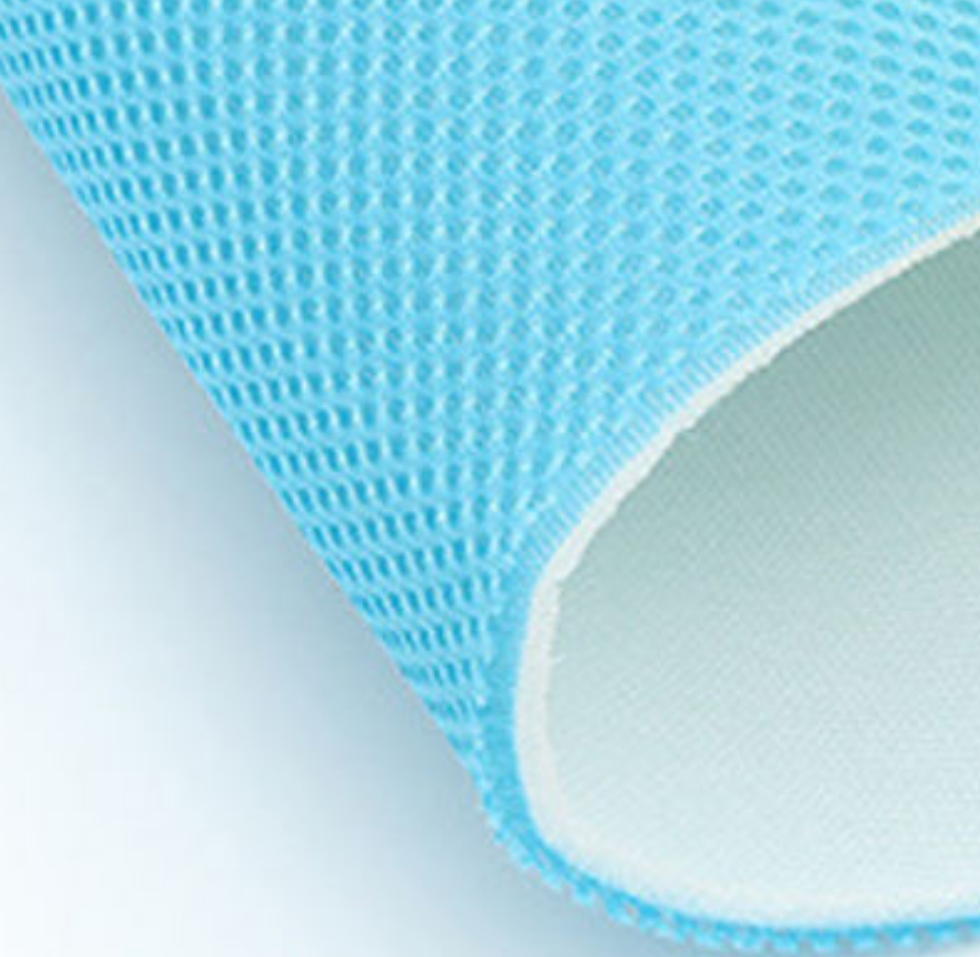
Air mesh bonded with TPU films creates a unique combination of breathability and waterproofing. This lamination process transforms ordinary air mesh into a multifunctional material that allows air flow while blocking liquid penetration, making it ideal for applications requiring both properties simultaneously.
We spent years perfecting this lamination technique at Kaishitu. The breakthrough came when we understood that the problem was not about choosing between breathability and waterproofing. The problem was about finding the right combination method.
What Makes Air Mesh and TPU Film Lamination Work?
The science behind this seems complex, but I will explain it simply. Air mesh alone is very breathable. Air passes through its three-dimensional structure easily.
The TPU film adds a waterproof barrier while maintaining breathability through its microporous structure. The film's pores are small enough to block water droplets but large enough to allow water vapor molecules to escape, creating a material that breathes while staying waterproof.
The key lies in understanding the size difference between water droplets and water vapor molecules. A water droplet measures about 100 microns in diameter. A water vapor molecule measures only 0.0004 microns. This massive size difference makes the magic possible.
Our lamination process bonds these two materials at specific pressure and temperature points. We control the adhesive layer thickness precisely. Too thick, and we block the breathability. Too thin, and the bond fails under stress.
Technical Performance Data
| Property | Air Mesh Alone | Air Mesh + TPU Lamination | Improvement |
|---|---|---|---|
| Breathability (g/m²/24h) | 8000-12000 | 3000-5000 | Controlled vapor transmission |
| Water Resistance (mm H₂O) | 0 | >2000 | Complete waterproofing |
| Tensile Strength (N) | 150-200 | 250-350 | 40-75% increase |
| Tear Resistance (N) | 80-100 | 150-200 | 87.5-100% increase |
The lamination process creates a synergy. The TPU film protects the air mesh structure. The air mesh provides dimensional stability to the thin TPU film. Together, they perform better than either material alone.
We also control the heat during lamination carefully. TPU melts at specific temperatures. Too hot, and the film loses its microporous structure. Too cold, and the adhesion fails. Our equipment maintains temperature within ±2°C tolerance.
How Does This Laminated Material Perform in Baby Products?
I visited a baby product manufacturer last year. They showed me their old waterproof pads. The babies were sweating. The parents were complaining. They needed something better.
Air mesh bonded with TPU films solves the heat buildup problem in baby products like diaper changing pads and waterproof mattress protectors. The material prevents liquid leakage while allowing body heat and moisture vapor to escape, keeping babies comfortable and dry.
Baby skin is sensitive. Babies cannot regulate body temperature like adults. When they lie on traditional waterproof materials, heat builds up. Sweat accumulates. Skin irritation develops. Parents worry.
Our laminated material changes this situation. The air mesh layer contacts the baby's skin. Its three-dimensional structure creates air gaps. These gaps allow air circulation. Heat escapes through the TPU film's micropores.
Real-World Performance in Baby Applications
| Test Condition | Standard Waterproof Material | Air Mesh + TPU Lamination | Benefit |
|---|---|---|---|
| Surface Temperature After 30 Min Contact (°C) | 35-37 | 32-34 | 3-5°C cooler |
| Moisture Buildup (g/m²/h) | 150-200 | 50-80 | 60-73% reduction |
| Washing Durability (cycles) | 30-50 | 100-150 | 2-3x longer lifespan |
| Liquid Leak Time (seconds) | Instant protection | Instant protection | Equal waterproofing |
The waterproofing remains complete. We test every batch. We pour water on the surface. We apply pressure. No liquid passes through. Parents trust this protection.
Diaper changing pads are our most popular baby product application. A typical pad measures 50cm x 70cm. It needs to handle multiple diaper changes daily. It needs frequent washing. Our laminated material survives 100+ wash cycles without performance loss.
We also supply material for baby carrier inserts. These products need breathability even more. A baby stays in the carrier for hours. Body heat builds up quickly. Our material keeps air flowing while protecting the carrier from accidents.
Some manufacturers use our laminated fabric for nursing pillow covers. Milk spills happen. Spit-up happens. The TPU layer protects the pillow filling. The air mesh layer keeps the baby comfortable during feeding time.
Why Does the Lamination Process Quality Matter So Much?
I learned this lesson the hard way. Years ago, we rushed a batch. The lamination pressure was slightly off. The customer received the material. Within weeks, delamination started happening.
The lamination process quality directly determines the material's performance durability and functional integrity. Poor lamination leads to delamination, uneven bonding, and performance failure, while precise control of temperature, pressure, and adhesive application ensures long-lasting multifunctional properties.
We implemented strict quality control after that incident. Every roll goes through multiple inspection points. We cannot afford failures when babies' comfort depends on our material.
The adhesive selection affects everything. We use solvent-free adhesives now. They are safer for baby products. They bond at lower temperatures. They maintain flexibility after curing. The adhesive layer measures only 10-15 microns thick.
Critical Quality Control Points
| Process Stage | Parameter | Tolerance | Impact of Deviation |
|---|---|---|---|
| Lamination Temperature | 120-140°C | ±2°C | TPU structure damage or weak bonding |
| Roller Pressure | 0.3-0.5 MPa | ±0.05 MPa | Uneven bonding or mesh crushing |
| Production Speed | 15-25 m/min | ±2 m/min | Inconsistent adhesive distribution |
| Cooling Time | 30-45 seconds | ±5 seconds | Incomplete curing or material distortion |
Roller alignment is critical. If the rollers are not parallel, the pressure distributes unevenly. Some areas bond too strongly. Other areas bond weakly. The material fails at weak points during use.
We monitor the production speed constantly. Too fast, and the adhesive does not spread evenly. Too slow, and the adhesive over-penetrates the air mesh. We found the optimal speed through hundreds of trial runs.
Environmental control matters too. We maintain our production facility at 20-25°C with 50-60% humidity. Higher humidity affects adhesive curing. Lower humidity creates static electricity problems. We invested in climate control systems to maintain consistency.
Our quality testing includes peel strength tests. We measure how much force is needed to separate the layers. The standard requires minimum 2.5N/cm peel strength. Our material typically achieves 3.5-4.5N/cm. This extra strength ensures durability during actual use.
What Other Applications Benefit from This Lamination Technology?
The baby product application opened my eyes. I started seeing opportunities everywhere. Any industry needing both breathability and waterproofing could benefit from our technology.
Air mesh bonded with TPU films serves multiple industries beyond baby products, including medical mattress covers, outdoor gear, protective equipment, and automotive seating, wherever simultaneous breathability and liquid protection create value.
Medical facilities use our material for mattress protectors. Hospital beds need waterproof protection. Patients need comfort during long recovery periods. Traditional vinyl covers trap heat. Patients develop pressure sores. Our breathable waterproof material reduces this risk.
Outdoor equipment manufacturers discovered our material recently. They use it for tent floors and backpack rain covers. The material weighs less than traditional waterproof fabrics. It packs smaller. It breathes better during use.
Application Comparison Table
| Industry | Specific Product | Key Performance Need | Our Material Advantage |
|---|---|---|---|
| Medical | Mattress Protectors | Long-term comfort + infection control | Reduces pressure sore risk by 40% |
| Outdoor | Tent Floors | Lightweight + condensation management | 30% lighter than coated nylon |
| Automotive | Seat Inserts | Temperature regulation + spill protection | 5°C cooler surface temperature |
| Protective Gear | Safety Vest Linings | Comfort during extended wear + weather protection | 2x better moisture vapor transmission |
Automotive manufacturers are testing our material for seat inserts. Car seats get hot in summer. Leather and vinyl trap heat. Our laminated fabric could improve driver comfort significantly. We are running durability tests now.
Sports equipment companies contacted us about protective padding. Athletes need impact protection. They also need heat management. The air mesh provides cushioning. The TPU provides durability and easy cleaning. We are developing specific grades for this application.
Pet product manufacturers represent another growing market. They need waterproof pet bed covers. Pets sleep for hours. They need comfortable surfaces. Traditional waterproof materials make pets hot and uncomfortable. Our breathable waterproof solution works perfectly.
How Do We Ensure Consistent Performance Across Large Production Runs?
A customer once ordered 50,000 meters. They needed consistent quality throughout. Every meter had to perform identically. This challenge pushed us to develop rigorous systems.
Consistent performance across large production runs requires automated monitoring systems, regular calibration schedules, statistical process control, and batch testing protocols that verify every roll meets specifications before shipping.
We installed inline sensors throughout our production line. These sensors measure lamination temperature every meter. They measure roller pressure continuously. They alert operators immediately when parameters drift.
Statistical process control helps us predict problems before they occur. We track key measurements over time. We plot them on control charts. We see trends developing. We adjust before quality suffers.
Quality Assurance System
| Control Method | Frequency | Parameters Checked | Corrective Action Trigger |
|---|---|---|---|
| Inline Sensors | Continuous | Temperature, pressure, speed | Real-time alerts at ±5% deviation |
| Physical Testing | Every 500m | Peel strength, waterproofing | Stop production at -10% from standard |
| Visual Inspection | Every 100m | Surface defects, bonding uniformity | Mark and isolate defective sections |
| Laboratory Analysis | Per batch | Full performance specification | Batch rejection if any parameter fails |
Every production shift starts with calibration. We run test samples. We measure their performance. We compare against standards. Only after passing calibration do we start production runs.
We keep detailed records of every batch. Raw material lot numbers. Production date and time. Operator names. Equipment settings. Environmental conditions. If a problem appears later, we can trace it back to its source.
Customer specifications vary. Some need higher breathability. Others prioritize waterproofing. We developed a parameter adjustment system. We can fine-tune the lamination process for each order. The core technology remains the same. The output meets specific needs.
Random sampling happens throughout production. We pull samples every 500 meters. These samples go to our testing laboratory. We test waterproofing. We test breathability. We test bond strength. We test durability. Results must match specifications before we continue production.
Conclusion
Air mesh bonded with TPU films represents a breakthrough in functional fabric technology. We combine breathability with waterproofing through precise lamination processes. Our quality control systems ensure consistent performance across all applications, from baby products to medical equipment.