What is 3D mesh made of?
You've probably seen 3D mesh fabric in mattresses or sports shoes, but have you ever wondered what materials create that bouncy, breathable structure? I was curious too when I first started working with these fabrics at Kaishitu, and understanding the composition changed everything about how I recommend products to customers.
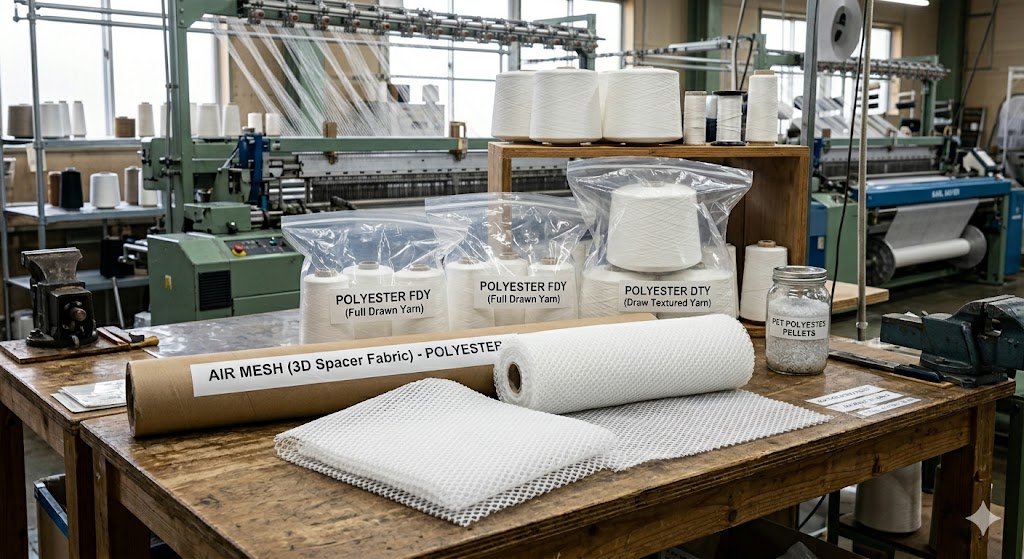
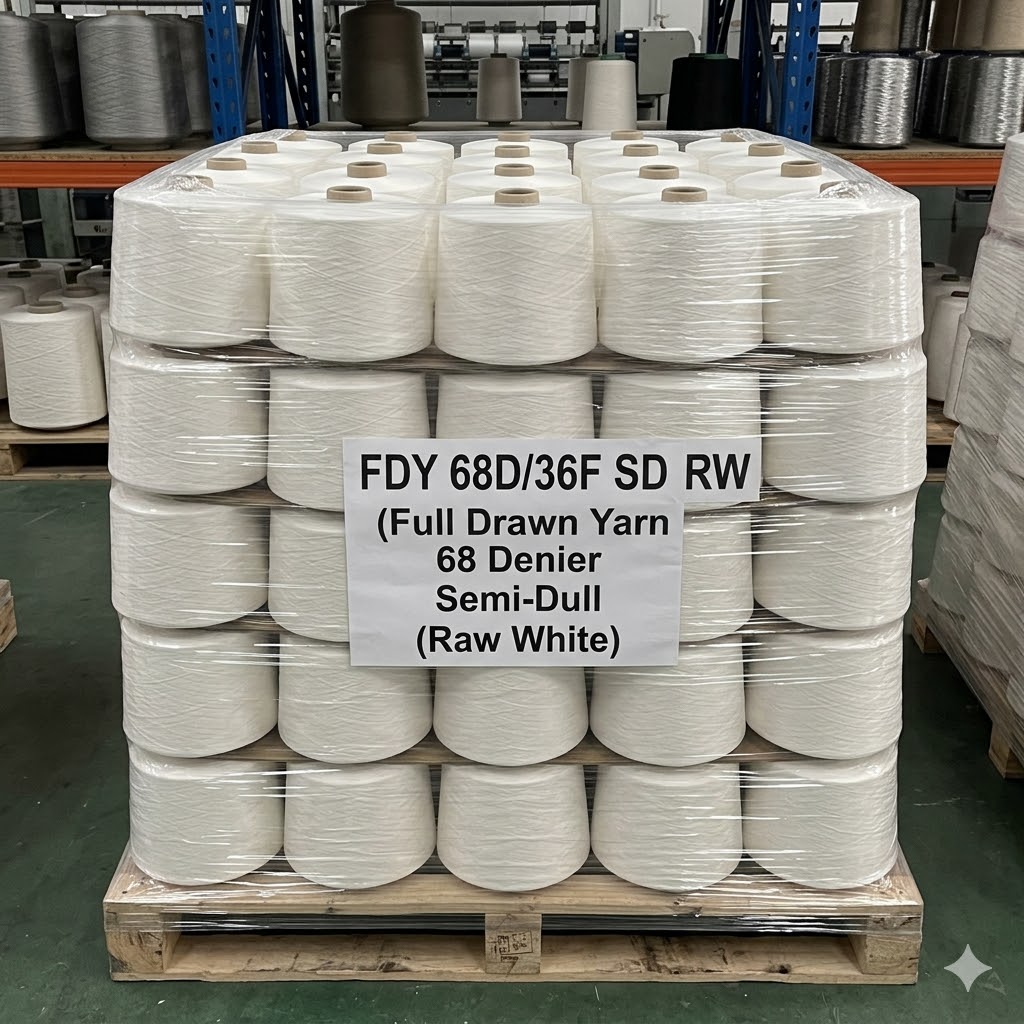
3D mesh fabric is primarily made from polyester (PET) using 68D FDY (Fully Drawn Yarn) for the surface layers and 30D FDY monofilament for the connecting middle layer, though variations using DTY (Draw Textured Yarn) and nylon offer different hand-feel and performance characteristics.
The material composition directly impacts how your finished product performs, so let's break down exactly what goes into making 3D mesh fabric and why it matters for your business.
What are the specifications and components of suitable materials?
Every 3D mesh fabric starts with yarn specifications that determine its final properties. I've worked with dozens of customers who initially didn't understand these specs, and it cost them time and money in wrong orders.
The most common 3D mesh construction uses 68D FDY polyester for top and bottom surfaces, 30D FDY polyester monofilament for the middle connecting layer, creating a stable three-layer structure with consistent thickness ranging from 2mm to 20mm.
When we manufacture 3D mesh fabric at Kaishitu, the material selection follows specific engineering principles. The surface layers need strength and structure, which is why 68D (denier) FDY yarn works perfectly. The "D" stands for denier, measuring fiber thickness—higher numbers mean thicker fibers. The 68D specification provides enough body to hold shape while remaining lightweight.
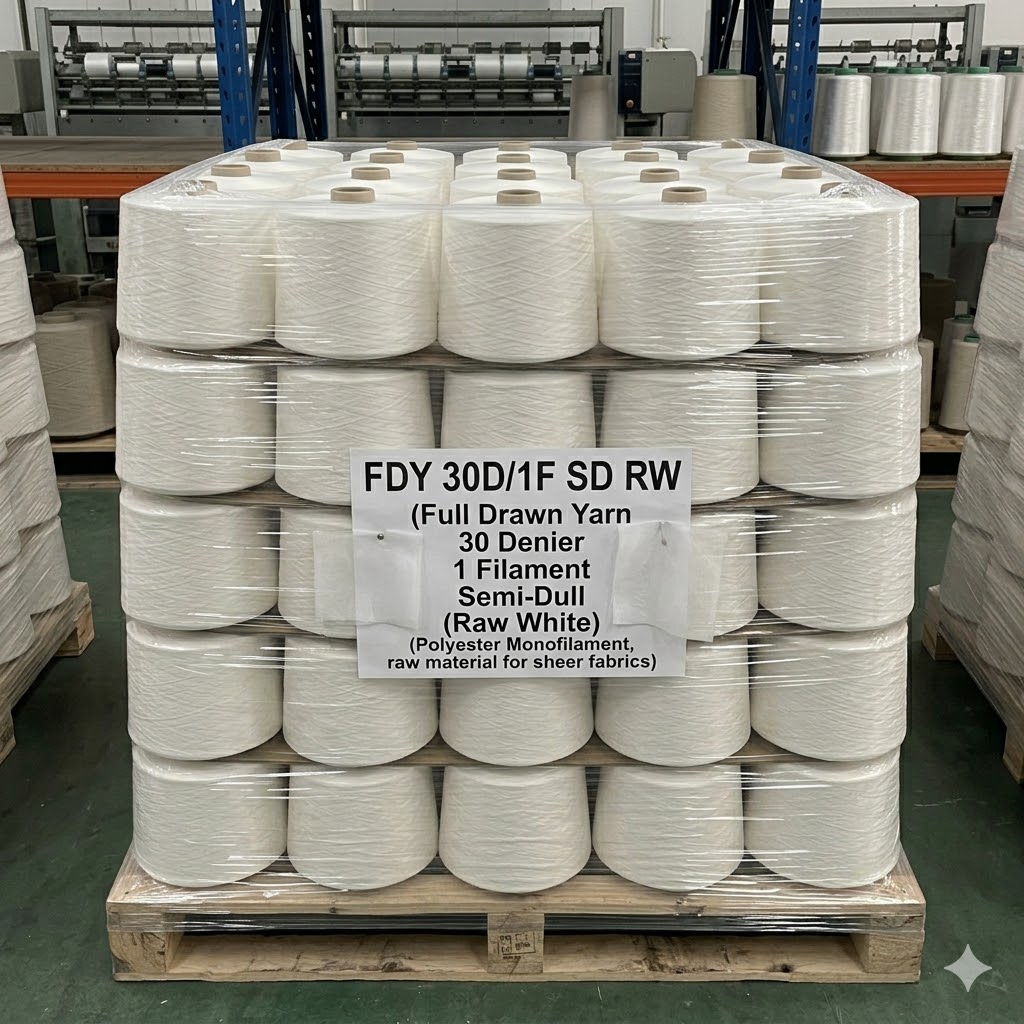
The middle connecting layer uses much finer 30D FDY monofilament. This thinner monofilament creates the vertical connections between top and bottom surfaces without adding unnecessary weight. The monofilament structure (single continuous filament rather than twisted fibers) gives clean vertical support that won't collapse under pressure.
Here's how the typical specifications break down:
| Component | Material Type | Specification | Function |
|---|---|---|---|
| Top Surface Layer | Polyester FDY | 68D | Structural integrity, pattern display |
| Bottom Surface Layer | Polyester FDY | 68D | Base stability, durability |
| Middle Connecting Layer | Polyester Monofilament | 30D FDY | Vertical support, spacing maintenance |
| Overall Thickness | Combined Structure | 2-20mm | Application-specific cushioning |
I remember one furniture manufacturer from Germany contacted me last year. They needed mattress fabric but didn't specify yarn type initially. After I explained these specifications, they realized their previous supplier had been using inconsistent denier counts, causing quality issues. Once they understood the 68D/30D standard combination, their product quality stabilized immediately.
The polyester composition itself typically uses PET (polyethylene terephthalate), which brings several manufacturing advantages. PET melts at consistent temperatures during production, holds dye well for color customization, and maintains dimensional stability across temperature ranges. For customers shipping globally, this stability means the fabric performs the same whether it reaches cold European warehouses or hot Middle Eastern storage facilities.
What are the characteristics of various materials?
Material choice transforms how 3D mesh fabric behaves in real-world applications. I've tested fabrics with different yarn types, and the differences are dramatic when you know what to look for.
FDY polyester creates firmer hand-feel with higher dimensional stability, DTY polyester offers softer touch with better elasticity, and nylon provides superior softness with exceptional strength, though each material serves different application requirements.
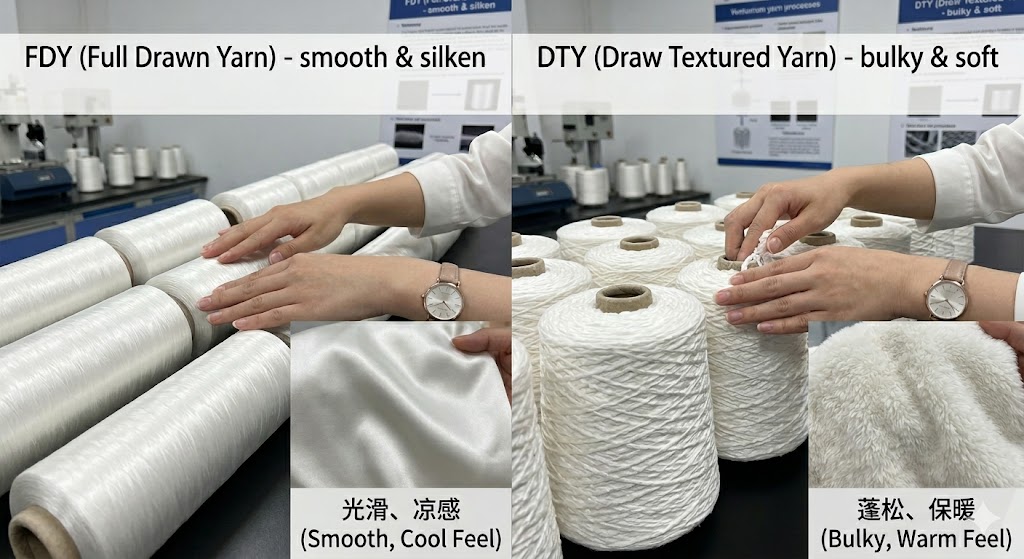
Let me walk you through each material type based on what I've learned from manufacturing thousands of meters of these fabrics.
FDY Polyester Characteristics
FDY (Fully Drawn Yarn) goes through complete stretching during production, which aligns the molecular chains tightly. This creates yarn with minimal stretch and a firmer hand-feel. When customers touch FDY-based 3D mesh for the first time, they often describe it as "crisp" or "structured."
The firmness serves specific purposes. For automotive seat covers, this rigidity maintains shape even after hours of sitting. The fabric doesn't sag or deform easily. I've sent samples to car interior manufacturers in South America, and they consistently choose FDY because their seats need to look fresh even after years of use.
FDY also holds its thickness better. The 3D structure doesn't compress as much under load compared to softer alternatives. This makes FDY ideal for applications where consistent cushioning matters—think mattress toppers that need to maintain their loft or shoe insoles that provide stable support.
However, the firm hand-feel isn't suitable for everything. Some customers making intimate apparel or baby products need softer materials, which brings us to DTY.
DTY Polyester Characteristics
DTY (Draw Textured Yarn) undergoes additional texturing processes that introduce crimp and bulk into the fiber structure. This creates a noticeably softer hand-feel compared to FDY. When you compress DTY-based 3D mesh, it yields more gently and recovers with a softer bounce.
I worked with a pillow manufacturer in Dubai last summer who initially ordered FDY fabric. Their customers complained the pillows felt too rigid. We switched them to DTY construction using the same 68D/30D specifications, and suddenly their customer satisfaction ratings jumped. The softer texture made the pillows more comfortable for side sleepers.
DTY brings better elasticity too. The crimped structure allows slight stretch, which matters for form-fitting applications. Sports bra manufacturers prefer DTY because the fabric moves with the body rather than restricting movement. The slight give makes the fabric more forgiving during wear.
The trade-off comes in dimensional stability. DTY compresses more easily than FDY, so applications requiring rigid support might not perform as well. For pet bed manufacturers, this actually works as an advantage—dogs and cats like the softer, more yielding surface for sleeping.
Nylon Material Characteristics
Nylon (polyamide) represents a completely different material chemistry with distinct properties. The molecular structure of nylon creates exceptional tensile strength, which means nylon-based 3D mesh can be thinner while maintaining the same load-bearing capacity as thicker polyester versions.
The hand-feel of nylon is remarkably soft—softer even than DTY polyester. I've had customers request nylon specifically for baby products and medical supports where skin contact comfort is critical. The surface feels almost silky compared to polyester's slightly rougher texture.
Nylon's strength-to-weight ratio impresses every time. A shoe manufacturer in Italy orders nylon 3D mesh for athletic shoe uppers because they can use a lighter fabric without sacrificing durability. Their shoes weigh less, which competitive runners notice immediately.
However, nylon comes with considerations. The material costs more than polyester, typically 30-50% higher depending on market conditions. Nylon also absorbs more moisture than polyester, which can be positive (wicks sweat better) or negative (takes longer to dry) depending on your application.
Here's a comprehensive comparison of material characteristics:
| Material Type | Hand-Feel | Strength | Elasticity | Moisture Behavior | Cost | Best Applications |
|---|---|---|---|---|---|---|
| FDY Polyester | Firm, crisp | High | Low | Low absorption | Standard | Mattresses, car seats, rigid supports |
| DTY Polyester | Soft, yielding | Moderate | Moderate | Low absorption | Standard | Pillows, pet beds, casual footwear |
| Nylon | Very soft, silky | Very high | Moderate | Higher absorption | Premium | Athletic shoes, medical supports, intimate apparel |
One customer story illustrates these differences perfectly. A sporting goods company in Saudi Arabia approached me last year wanting fabric for gym equipment covers. They tested all three materials. The FDY samples held their shape better for upright equipment like bike seats. The DTY samples worked better for flexible items like yoga mat carriers. The nylon samples became their choice for high-contact areas like bench press padding where both softness and durability mattered.
Hybrid Constructions
At Kaishitu, we sometimes create hybrid constructions mixing material types. For example, using DTY polyester for the surface layers (softer touch) with FDY monofilament in the middle (maintains structure). This gives you the best of both worlds—comfortable surface contact with stable internal support.
I recently developed a custom construction for a sofa manufacturer in Brazil. They needed their cushions to feel plush initially but maintain firm support underneath. We created a hybrid using DTY 68D for the top surface layer, FDY 68D for the bottom layer (which nobody touches), and FDY 30D for the connecting monofilaments. The result was exactly what they needed, and it's become one of their bestselling sofa lines.
The material chemistry also affects processing capabilities. Polyester holds up better to heat-setting processes, which matters when you need fabric with specific formed shapes. Nylon dyes more easily at lower temperatures, reducing energy costs for colored fabrics. These manufacturing considerations influence what I recommend based on a customer's production setup.
Another practical difference comes in washing and care. Polyester maintains its properties through repeated washing cycles with minimal shrinkage. Nylon can develop slight dimensional changes after multiple wash cycles, though the effect is minimal with proper care. For B2B customers making consumer products, understanding these long-term performance characteristics helps set accurate product care instructions.
Environmental considerations increasingly matter too. Polyester recycling infrastructure is more developed globally, so recycled PET yarn (rPET) is readily available. Some of our European customers now request rPET-based 3D mesh to meet sustainability commitments. Nylon recycling is emerging but less established, though the material's superior durability means products last longer before disposal.
Conclusion
The materials forming 3D mesh fabric—whether FDY polyester, DTY polyester, or nylon—fundamentally determine performance, hand-feel, and application suitability, making material selection the critical first decision in product development.